
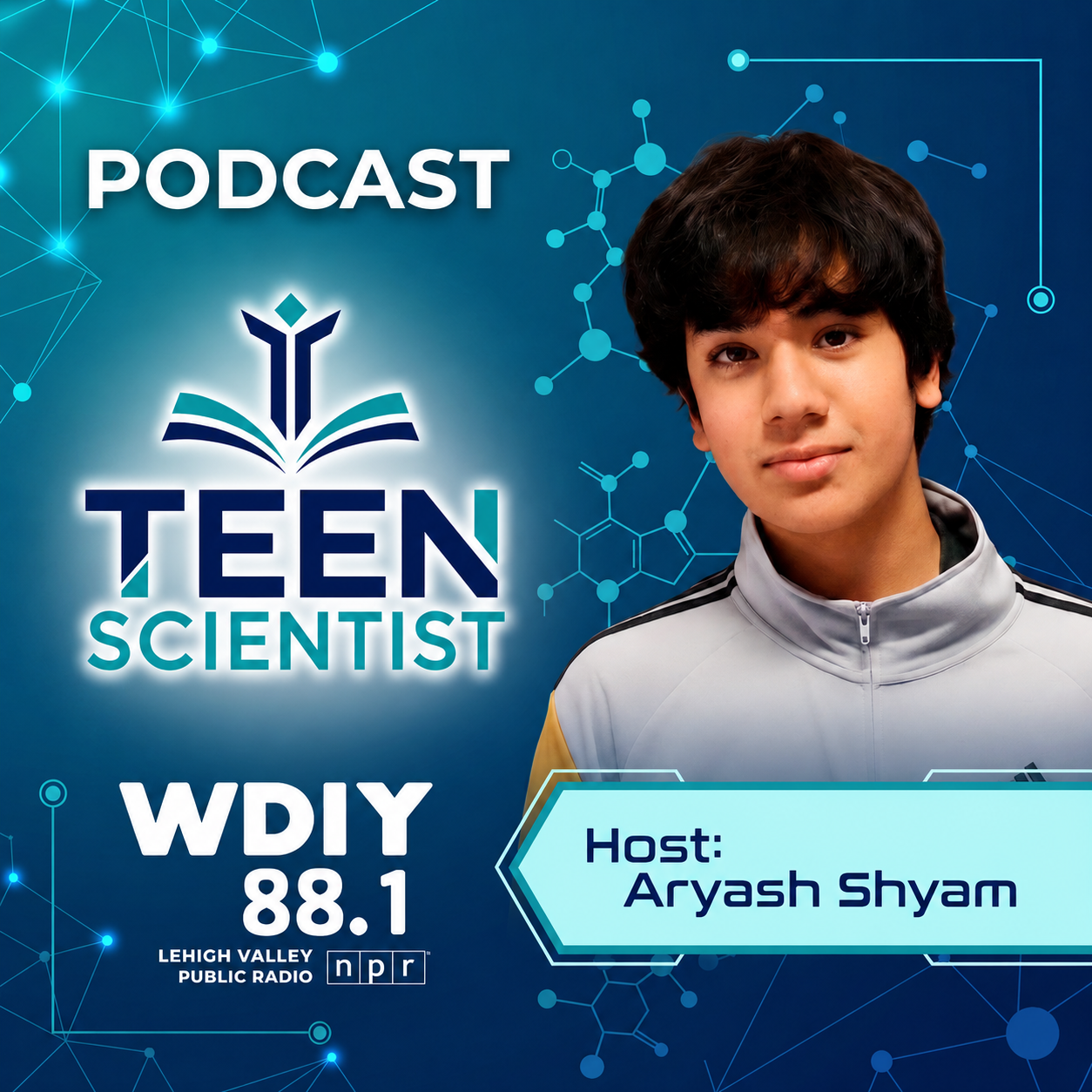
NPR · WDIY Lehigh Valley Public Radio
Where Teen Curiosity Meets World-Class Science
Teen Scientist is an award-winning NPR podcast hosted by Aryash Shyam — exploring AI, space, climate, math, and the breakthroughs shaping our future, one conversation at a time.
Three-time Excellence in Broadcasting Award winner · 2024 Keystone Media Award
About Teen Scientist
Teen Scientist, hosted by Aryash Shyam on WDIY, Lehigh Valley Public Radio, brings bold ideas in science, technology, engineering, and mathematics to life from a teenage perspective. Airing the first Thursday of every month from 6:00 to 6:30 PM, the program features conversations with young innovators, researchers, scientists, engineers, educators, and leading STEM experts exploring the discoveries, breakthroughs, and big questions shaping the future.
From artificial intelligence and climate science to space, medicine, math, the brain, technology, and the future of learning, Teen Scientist makes complex ideas accessible, engaging, and relevant for curious listeners of all ages.
Teen Scientist has received three Excellence in Broadcasting Awards from the Pennsylvania Association of Broadcasters in 2021, 2023, and 2024, as well as a 2024 Keystone Media Award from the Pennsylvania NewsMedia Association.
What we do:
- Interviews leading scientists and innovators
- Explores breakthrough discoveries
- Highlights inspiring research
- Encourages young people to pursue science, technology, engineering, and mathematics
- Inspires the next generation of scientists
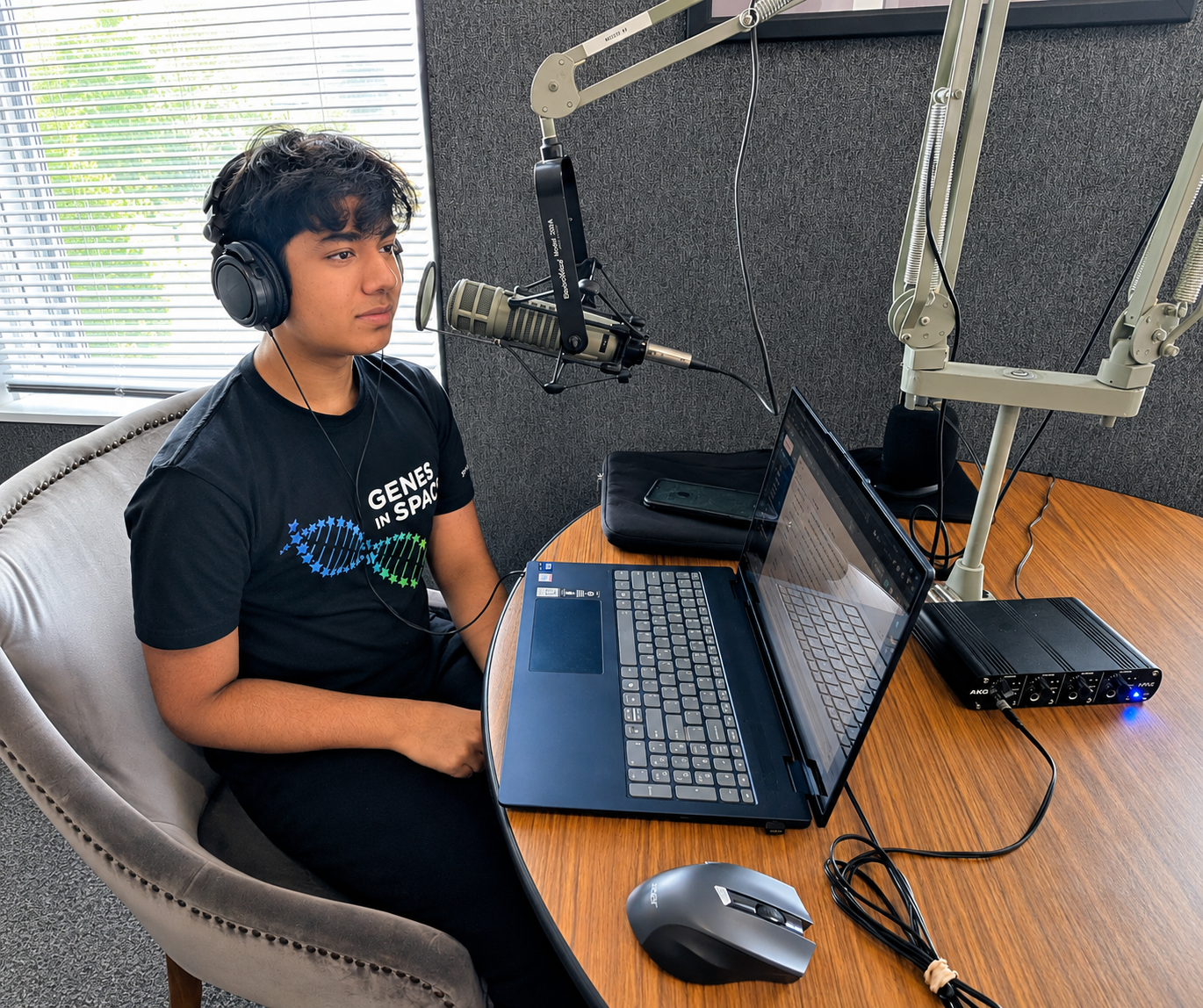
Your Host
Aryash Shyam
Teen Scientist Host · Youth Media
Aryash Shyam is a Lehigh Valley ninth grader, young scientist, STEM communicator, and host of Teen Scientist on WDIY, Lehigh Valley Public Radio. He brings a student's curiosity and a broadcaster's focus to conversations with researchers, innovators, and leading STEM experts, helping students and families understand the science shaping their world. Through Teen Scientist, Aryash explores artificial intelligence, space science, biotechnology, climate innovation, health, mathematics, and student research — making complex ideas clear, human, and relevant.
- 2026 Genes in Space Junior Scientist Award winner
- 2026 PETE&C Technology Student of the Year
- 2025 Pennsylvania State Merit Winner, 3M Young Scientist Challenge
- First place, NASA 2026 AIAA Essay Contest
- Lehigh Valley Science Fair winner
Where to Listen
Tune in on your favorite platform — new episodes air the first Thursday of every month.
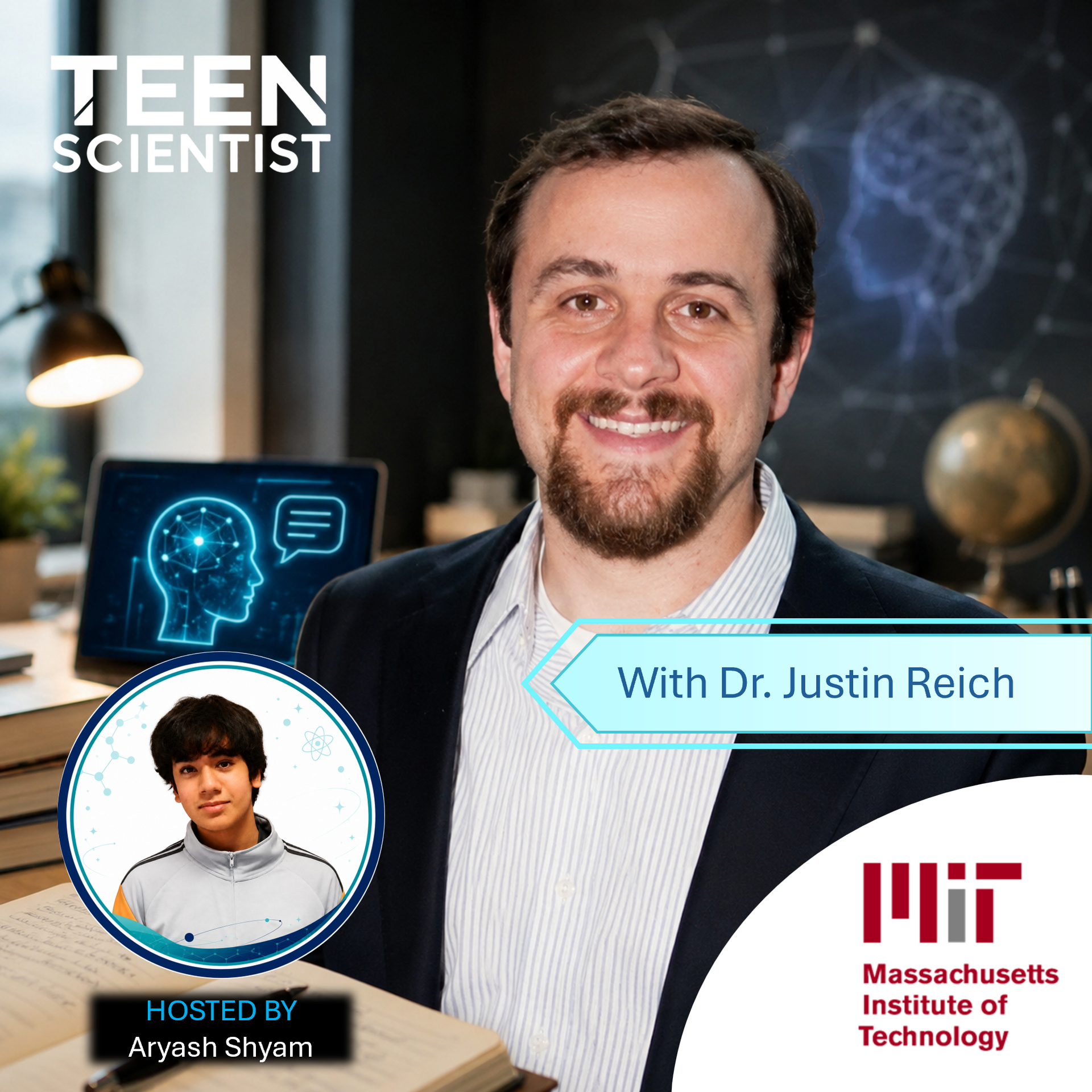
Episode 1 · August 6, 2026
Can AI Really Transform Education?
with Dr. Justin Reich · MIT Teaching Systems Lab
It is 10:37 p.m., your essay is due tomorrow, and an AI chatbot is offering you an outline, a thesis, and a sentence smarter than anything you were about to write. Did it just help you learn, or quietly do the thinking for you? On this episode of Teen Scientist, host Aryash Shyam talks with Dr. Justin Reich, Director of the MIT Teaching Systems Lab and Associate Professor at MIT, about what happens when generative AI lands in homework, classrooms, and the learning process itself.
Dr. Reich explains why generative AI 'crashed the party' in schools, how students use it as a tutor, a shortcut, or a survival strategy, and why 'is it cheating?' is the wrong question. Drawing on his series The Homework Machine and his book Failure to Disrupt, he and Aryash explore AI's 'jagged frontier,' what past edtech hype can teach us, and how teachers can redesign assignments, so students still do the thinking that real learning requires.
AI · Education · Edtech · MIT · Generative AI
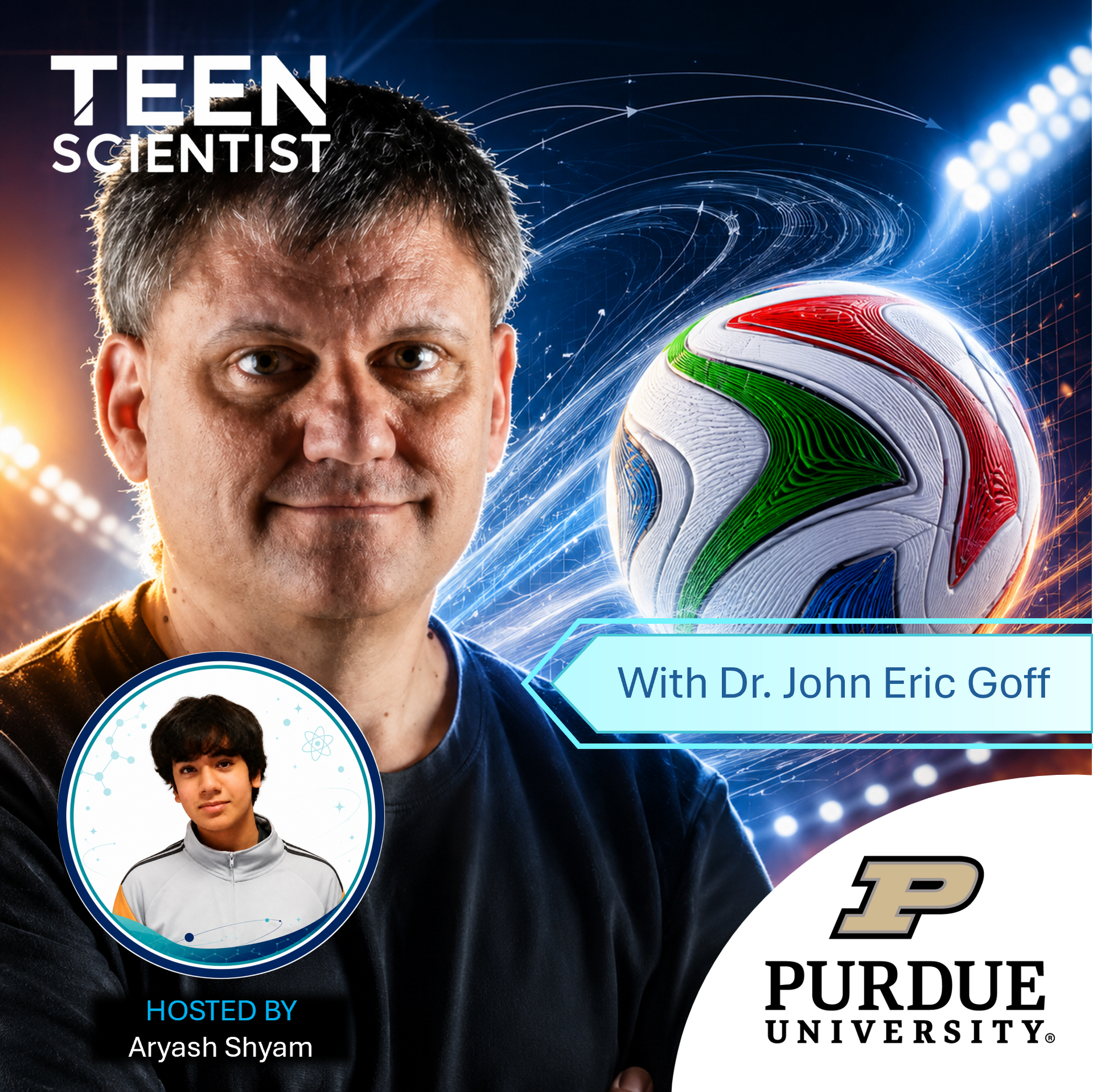
Episode 2 · September 3, 2026
Can a Soccer Ball Change the World Cup?
with Dr. John Eric Goff · University of Puget Sound
From the stands, a soccer ball looks like the one thing at a World Cup that could not possibly be controversial. Yet every four years, players, goalkeepers, and commentators end up arguing about how the ball moves. On this episode of Teen Scientist, host Aryash Shyam talks with Dr. John Eric Goff, a physicist at the University of Puget Sound who has spent two decades studying the aerodynamics of World Cup balls, about the hidden science inside the one object the whole planet is watching.
Dr. Goff explains the 'drag crisis' that decides how a ball flies, how spin bends a free kick through the Magnus effect, and why a nearly spinless shot can wobble and knuckle in ways goalkeepers dread. He and Aryash dig into the 2026 ball, the Trionda, and what wind-tunnel data reveals about its rougher surface and four-panel design, why the infamous 2010 Jabulani became a cautionary tale, how altitude in a city like Mexico City changes the game, and what is actually inside a modern connected ball.
Physics · Sports Science · World Cup · Aerodynamics · Magnus Effect
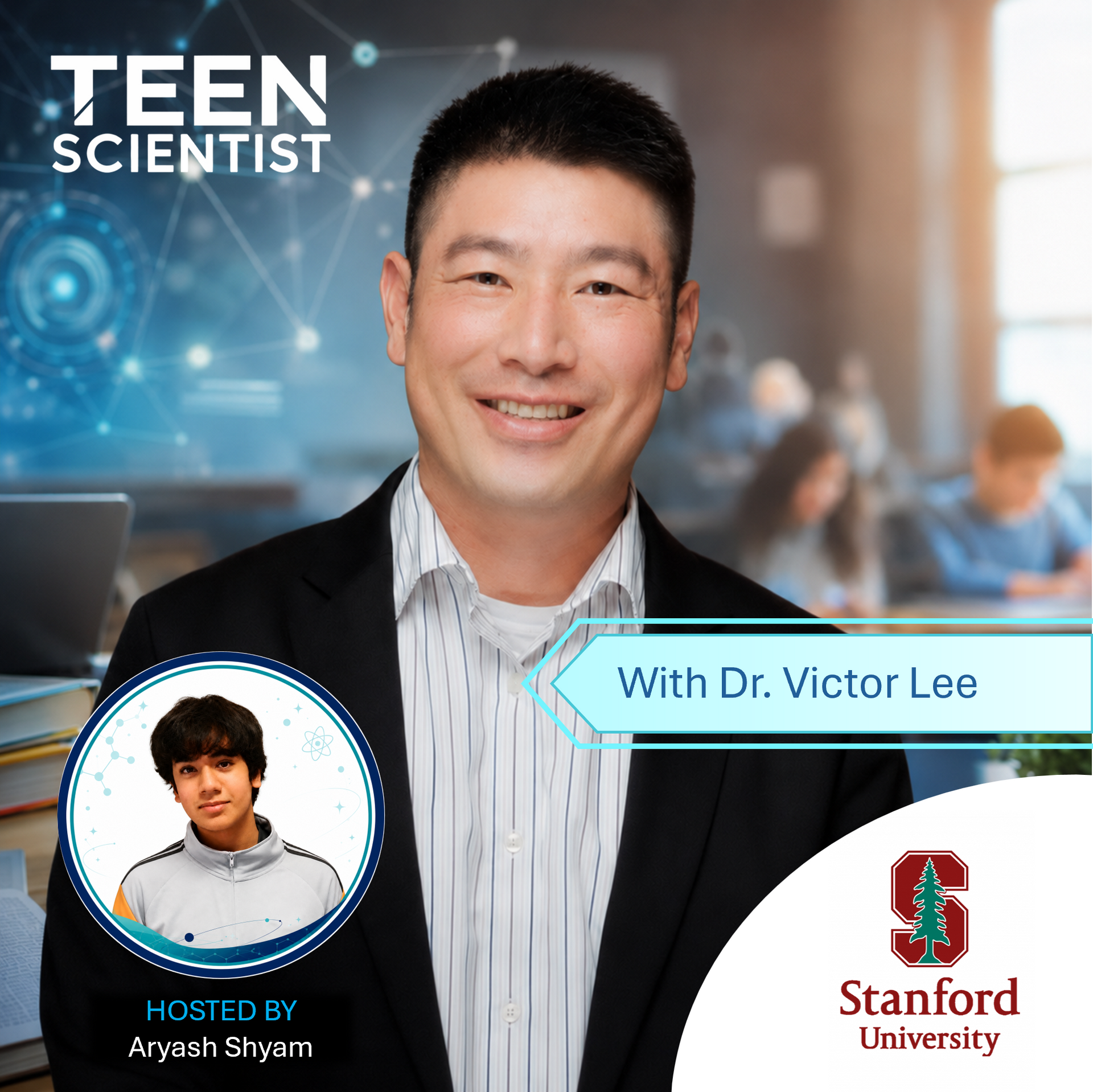
Episode 3 · October 1, 2026
Are You More Than Your Data?
with Dr. Victor Lee · Stanford Graduate School of Education
Your watch says you slept badly. Your phone says your screen time is up. A school app says your grade is slipping, and your feed somehow knows the next thing you'll watch. But how much of 'you' do those numbers really capture? On this episode of Teen Scientist, host Aryash Shyam talks with Dr. Victor Lee, a professor in the Stanford Graduate School of Education, about how data quietly shapes the way we see ourselves, our schools, and the world around us.
Dr. Lee explains why data is never simply 'found' — it is made, through human choices about what to count, what to ignore, and what story a number is supposed to tell. He and Aryash dig into sleep scores, step counts, grades, recommendation feeds, wearable trackers, and the famous 10,000-step goal that began as a marketing slogan, and explain why data literacy — learning to question a number before you trust it — may be one of the most important skills of the AI age.
Data Literacy · AI Literacy · Stanford · Wearables · Algorithms
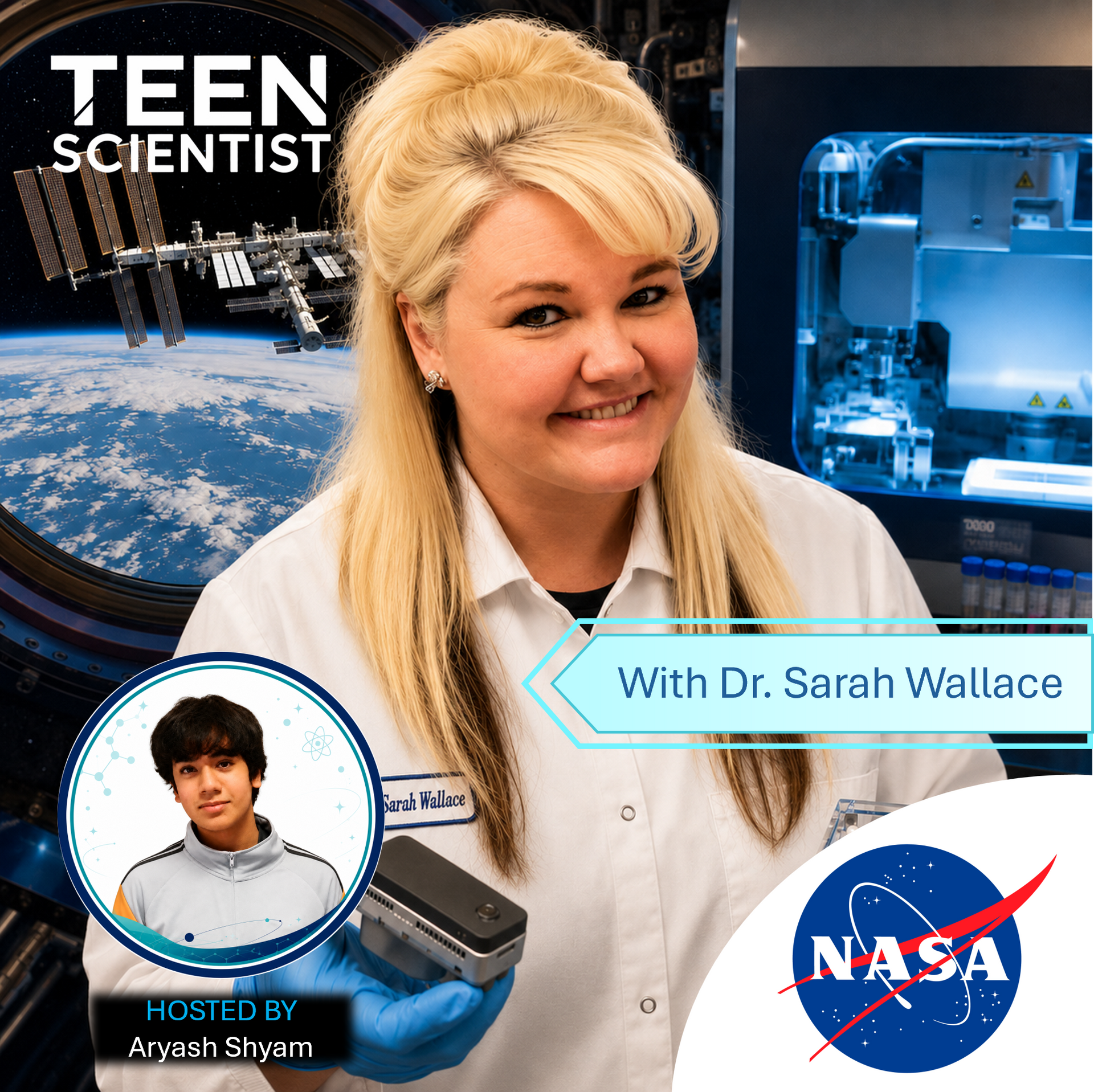
Episode 4 · November 5, 2026
The Invisible Crew Aboard the Space Station
with Dr. Sarah Wallace · NASA Johnson Space Center
The International Space Station is the cleanest, most carefully engineered spacecraft humans have ever built, yet run a swab across a single handrail, and you are very much not alone. Every crew member, meal, and cargo delivery carries trillions of tiny stowaways: bacteria and fungi that live in the air, water, and on the surfaces of the station. On this episode of Teen Scientist, host Aryash Shyam talks with Dr. Sarah Wallace, a microbiologist at NASA's Johnson Space Center whose team made it possible to sequence DNA in space for the first time, about the invisible ecosystem that travels with astronauts, and why NASA works so hard to keep track of it.
Dr. Wallace explains how NASA moved from 'grow and return' (flying samples all the way back to Earth just to ask what they are) to 'sequence in orbit,' using a candy-bar-sized device called the MinION that reads DNA by threading it through tiny pores. She and Aryash explore why most microbes are not villains, how knowing what is growing on a spacecraft protects both the crew and its water system, and why identifying microbes on board becomes essential on long missions to the Moon and Mars. It gets personal, too: Aryash, a Genes in Space Junior Scientist Award winner, asks what advice she would give students designing biology experiments they hope could one day fly in space.
Space Biology · NASA · DNA Sequencing · ISS · Microbiology · Genes in Space
Episode 5 · December 3, 2026
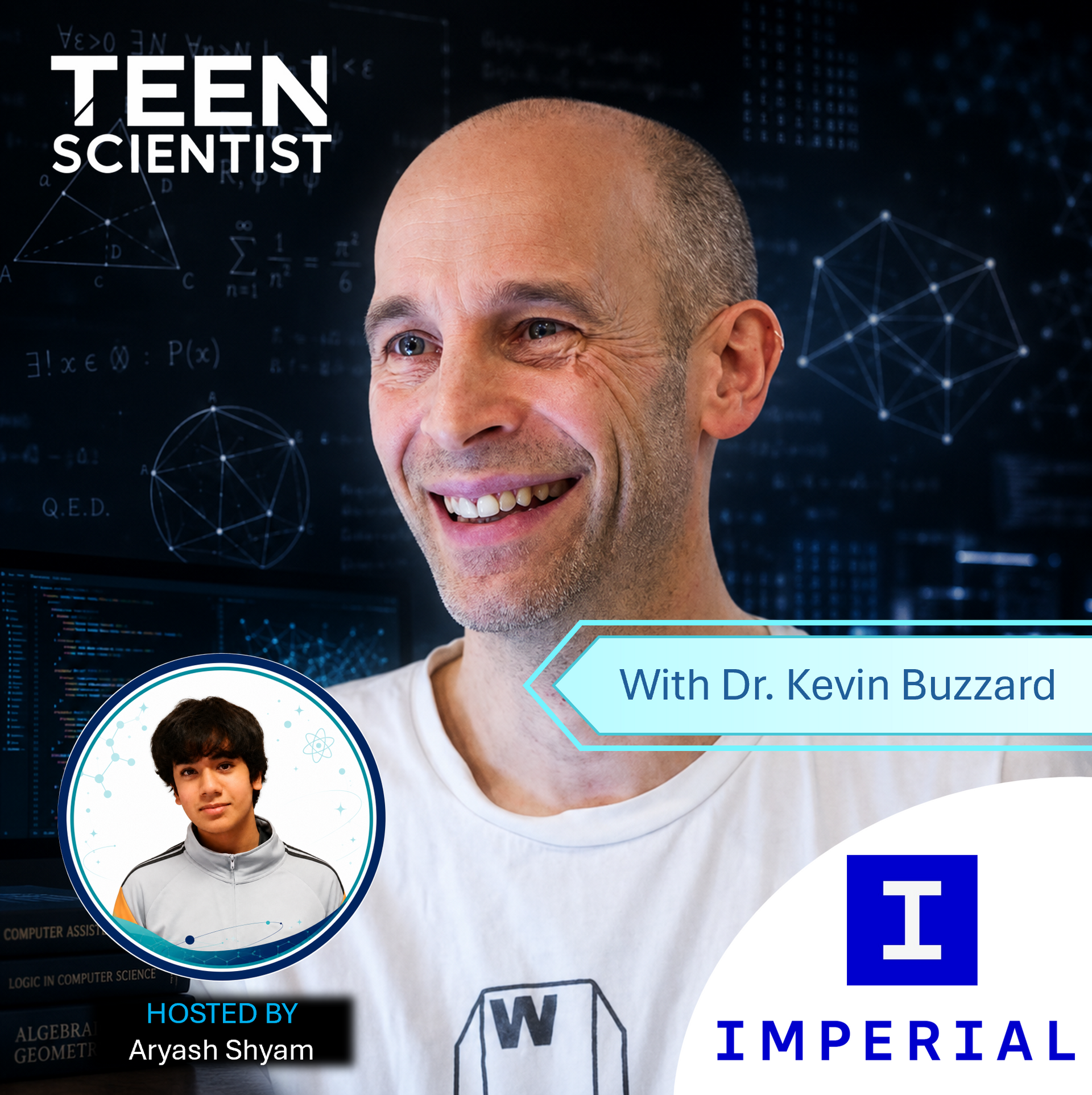
Will Computers Prove Math Theorems?
with Professor Kevin Buzzard · Imperial College London
You write 'obviously' in a proof, and your teacher circles the word and asks you to prove it. Now imagine a computer that refuses to accept 'obvious' until every single step is spelled out. On this episode of Teen Scientist, host Aryash Shyam talks with Professor Kevin Buzzard, a mathematician at Imperial College London, about whether computers are already changing how humans prove, check, and understand mathematics.
Professor Buzzard explains proof assistants like Lean, why so much of modern mathematics is only 'mostly right' instead of 'definitely right,' and how a famous 350-year-old puzzle — Fermat's Last Theorem — is now being rebuilt, line by line, inside a computer. He and Aryash draw a sharp line between AI's pattern-finding and real proof, and ask what the future of human reasoning looks like when mathematicians work alongside machines.
Mathematics · Proof Assistants · Lean · Fermat's Last Theorem · Formal Verification · Imperial College
Episode 6 · Air Date TBD
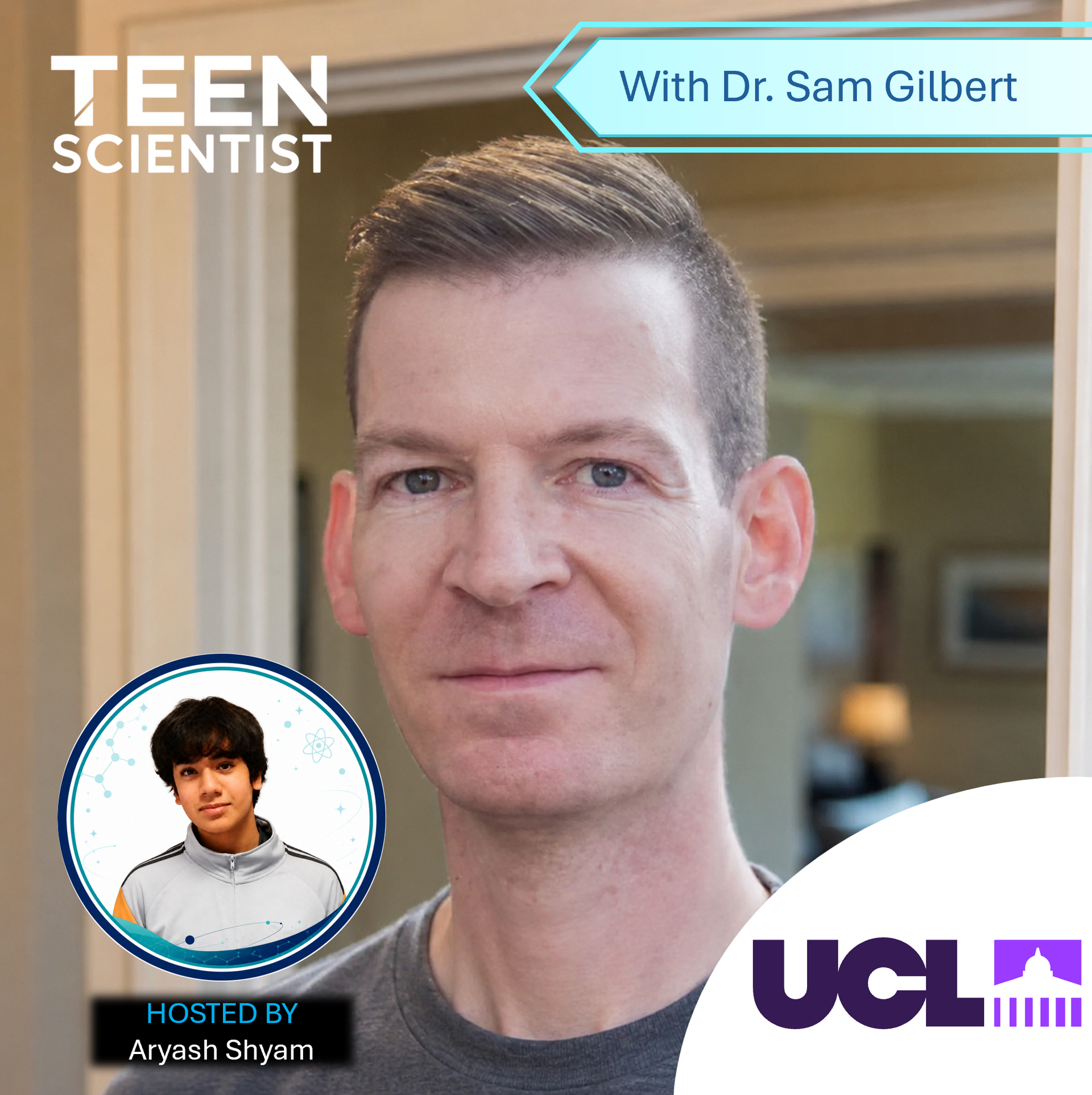
Why Do We Forget Things?
with Dr. Sam Gilbert · University College London
You walk into a room on a mission, and instantly blank on why you went in. It is a tiny, universal glitch, and it says something surprising about how memory actually works. On this episode of Teen Scientist, host Aryash Shyam talks with Dr. Sam Gilbert, a professor of cognitive neuroscience at University College London, about why we forget what we meant to do, and whether our phones are quietly changing how we remember.
Dr. Gilbert explains prospective memory (remembering to do something later) and cognitive offloading — how notes, alarms, calendars, a backpack by the door, and smartphone reminders become part of how we remember. He and Aryash discuss why reminders can dramatically cut forgetting, why 'saving it to your phone' can look like the brain choosing to let go, and how students can use memory tools wisely without becoming dependent on them.
Neuroscience · Memory · Cognitive Offloading · UCL · Smartphones · Psychology
Episode 7 · Air Date TBD
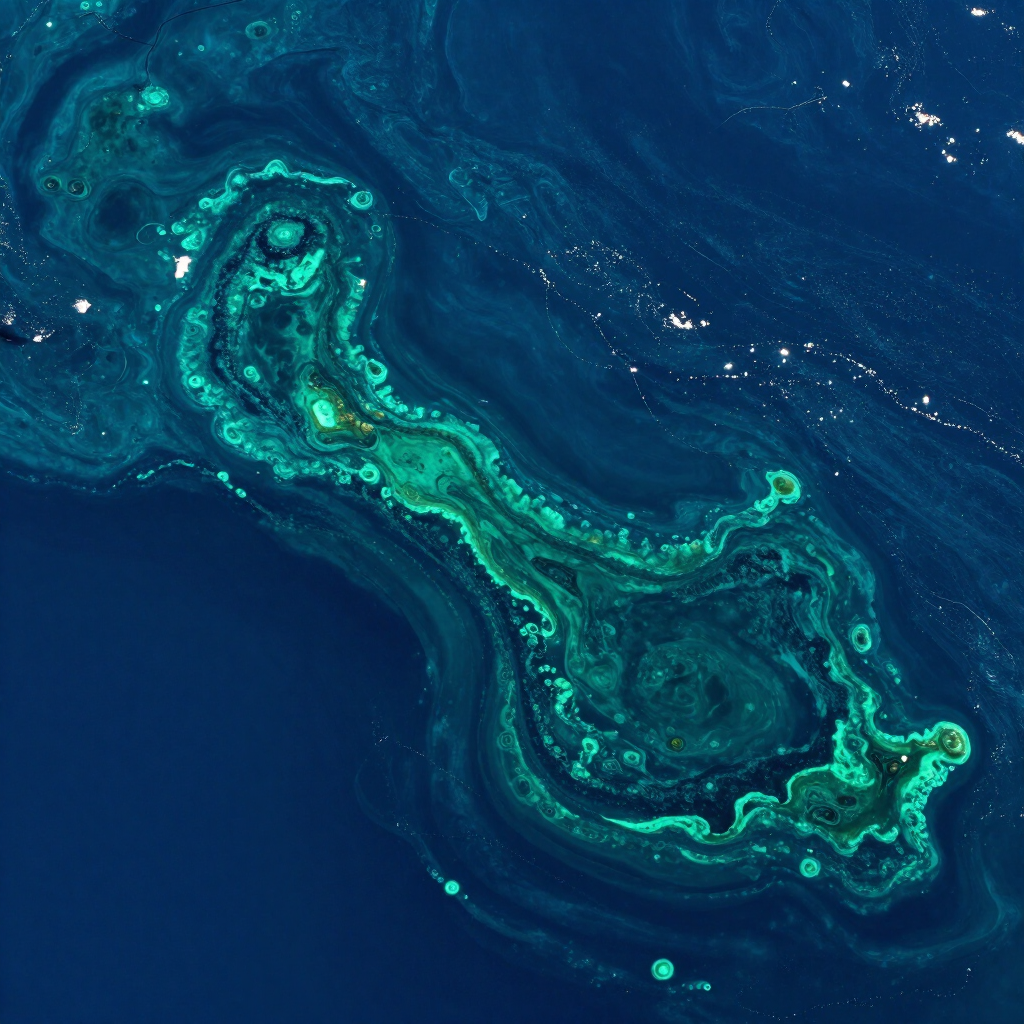
Can Satellites Tell When the Ocean Is Sick?
with Dr. Jeff Puschell · Northrop Grumman
From the beach, the ocean looks calm and blue. From orbit, the right satellite sees something else entirely: algae, sediment, pollution, and tiny shifts in color that can signal trouble. On this episode of Teen Scientist, host Aryash Shyam talks with Dr. Jeff Puschell, a space remote-sensing engineer at Northrop Grumman who helps design the instruments that watch our planet from space, about how satellites can tell when the ocean is 'sick.'
Dr. Puschell explains 'ocean color' and how it reveals harmful algal blooms like red tide, why a new geostationary, hyperspectral sensor called GLIMR will watch the Gulf of Mexico for hours at a time, and how instruments like VIIRS can even see Earth glowing at night. He and Aryash trace his path from studying distant stars to monitoring our own planet, and what it takes to build a sensor that has to work flawlessly, thousands of miles from the people who made it.
Remote Sensing · Ocean Health · Satellites · GLIMR · Climate · Northrop Grumman · Earth Observation
Episode 8 · Air Date TBD
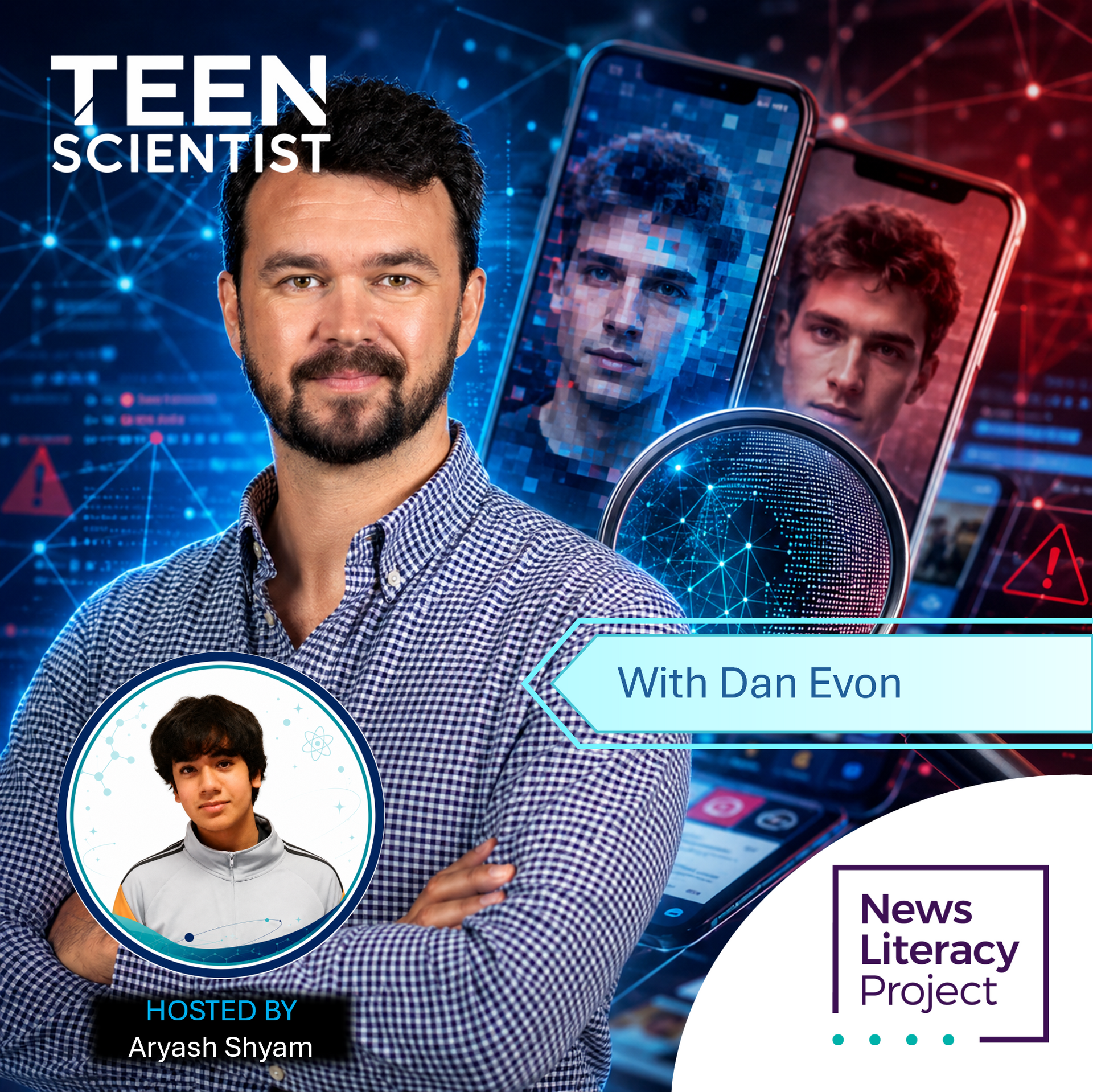
How Do We Know What's Real Online?
with Dan Evon · News Literacy Project
You open your phone and see a video that seems impossible: a celebrity saying something shocking, a photo too dramatic to be real, thousands of likes, and a caption insisting 'they don't want you to see this.' A few years ago the rule was simple: don't believe everything you see online. But now AI can fake voices, faces, screenshots, and evidence well enough to fool people who are paying attention. On this episode of Teen Scientist, host Aryash Shyam talks with Dan Evon, a fact-checker and misinformation researcher with the News Literacy Project who spent eight years tracking viral rumors at Snopes, about how to know what's real online without becoming suspicious of everything.
Dan explains why false claims spread fastest when they make us feel angry, afraid, or certain, and what that emotion does to our judgment, plus how generative AI changed the problem and what it did not. He and Aryash walk through a simple five-part test for any claim (authenticity, source, evidence, context, and reasoning), why 'spot the weird hands' tricks age badly, and why curiosity — and being willing to say 'I don't know yet' — may be the best defense against getting fooled.
Media Literacy · Deepfakes · Misinformation · Fact-Checking · News Literacy Project · AI · Snopes
Episode 9 · Air Date TBD
Can AI Help Solve Climate Change?
with Professor Priya Donti · MIT
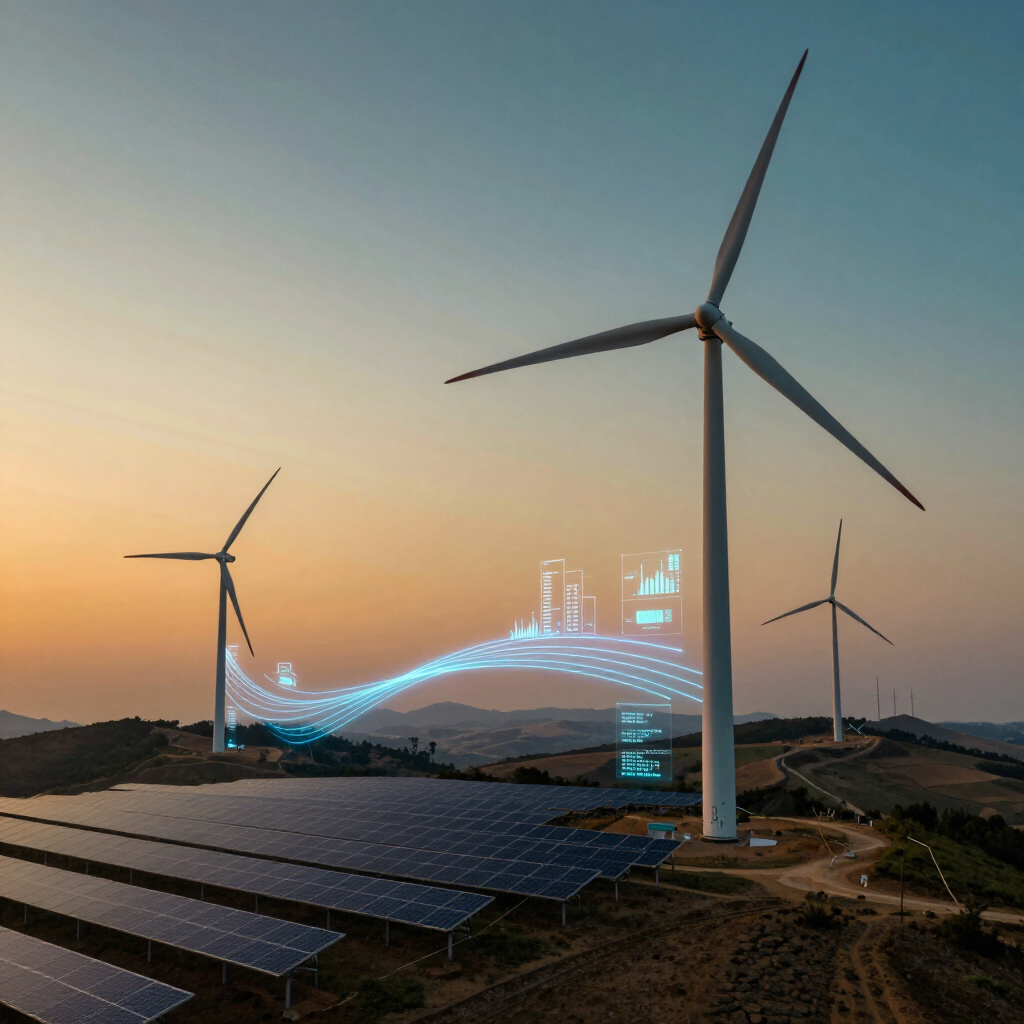
AI uses a lot of electricity, but it might also help us run on cleaner energy. So, can artificial intelligence help solve climate change without making it worse? On this episode of Teen Scientist, host Aryash Shyam talks with Professor Priya Donti, an assistant professor at MIT and co-founder of the nonprofit Climate Change AI, about the surprising place where AI and climate actually meet: the electric grid.
Professor Donti explains why the grid is one giant, real-time balancing act, why solar and wind make it cleaner but harder to run, and how machine learning can forecast renewable power and help keep the lights on while burning fewer fossil fuels. She and Aryash dig into the 'AI energy paradox,' why good climate AI has to respect the laws of physics, and how students can tell real climate solutions from projects that just sound green.
AI · Climate Change · Clean Energy · Power Grid · MIT · Renewable Energy · Machine Learning
Frequently Asked Questions
Everything you need to know about tuning in, subscribing, and staying up to date with Teen Scientist.
When does Teen Scientist air?
Teen Scientist airs live on the first Thursday of every month from 6:00 to 6:30 PM on WDIY, Lehigh Valley Public Radio. New episodes are also available on all major podcast platforms shortly after broadcast.How do I subscribe to Teen Scientist?
You can subscribe on NPR, Spotify, Apple Podcasts, Pocket Casts, Podbean, or Castbox. Search "Teen Scientist" on your preferred app, or use the listening links in the "Where to Listen" section above to go directly to the show.What topics does Teen Scientist cover?
Teen Scientist covers artificial intelligence, climate science, space biology, mathematics, neuroscience, data literacy, media literacy, and more — all from a teenage perspective. Every episode features a conversation with a leading researcher, scientist, engineer, or expert at the frontier of their field.How can I suggest a guest for the show?
Guest suggestions are welcome! Use the contact form on the Connect page to send your idea — include the guest's name, field, and why their work would resonate with a curious teen audience.Are past episodes archived and available to stream?
Yes — all past episodes are available on NPR at https://www.npr.org/podcasts/1057826866/teen-scientist and on all major podcast platforms.