

GreenBeam logo emblem

AI Robotics · Precision Lawn Care

GreenBeam: AI-Powered Robotic Weed Control

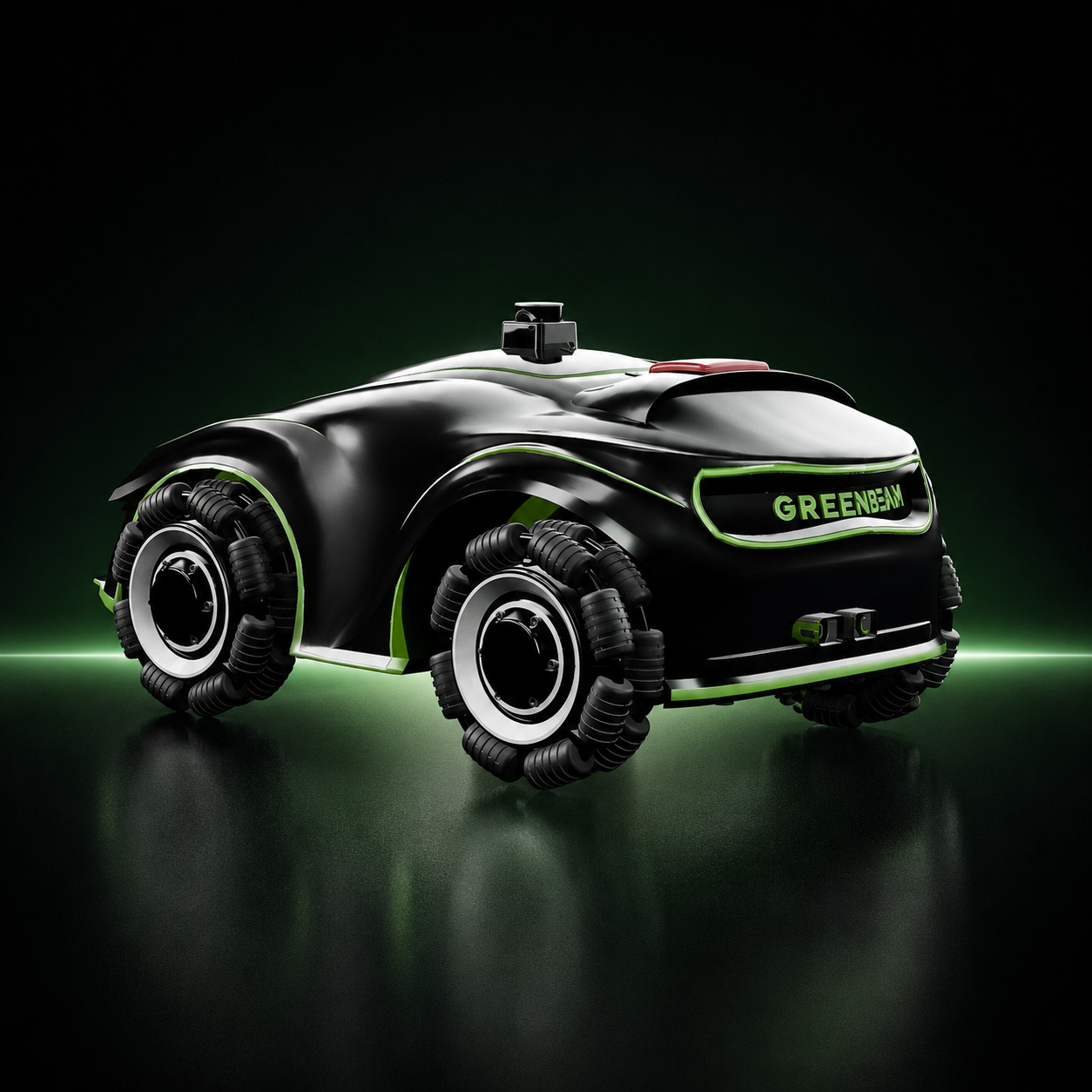
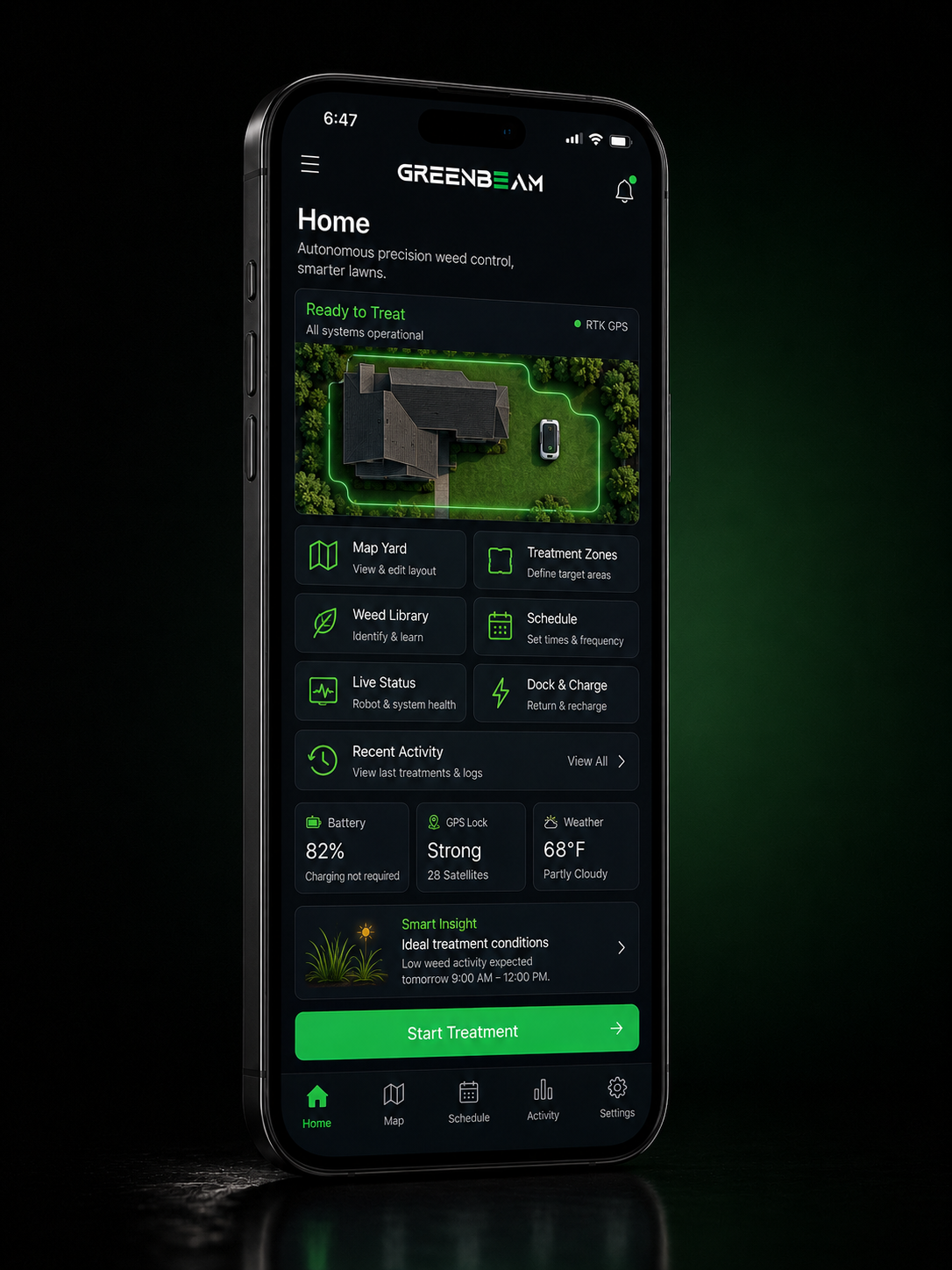
I'm Aryash Shyam, and I created GreenBeam, a working robotic prototype designed to identify and treat weeds in residential lawns using computer vision and a precision laser instead of routine chemical herbicide spraying. I designed the system, assembled the hardware, wrote the Python-based vision software, and integrated the control logic.

2025 Pennsylvania State Merit Winner · 3M Young Scientist Challenge

The Problem With Lawn Herbicides

I built GreenBeam to answer a practical question: can a robotic system identify and treat individual weeds precisely, reducing the need to spray an entire lawn with herbicide?

Ecosystem harm icon

Ecosystem Harm

Herbicides kill off non-target plants and beneficial insects, reducing biodiversity and disrupting food webs that farmers and communities depend on.

Water contamination icon

Soil & Water Contamination

Chemical runoff leaches into groundwater, rivers, and drinking-water supplies, leaving residue that persists for months or years after application.

Health risks icon

Health Risks

Prolonged exposure to common herbicides has been linked to increased risks of certain cancers, hormone disruption, and other serious health conditions in farmworkers and surrounding communities.

GreenBeam was built to answer one question: what if you could remove weeds precisely — without the chemical cost?

How I Built GreenBeam

GreenBeam is not just a concept. It's a working prototype I engineered from the ground up. I selected and assembled the robotics hardware, developed the computer-vision software, integrated the targeting system, and tested the prototype in real-world conditions.

Tractor spraying chemical herbicides on agricultural field

The Old Way

Spray Everything, Hope for the Best

Traditional herbicide application saturates entire lawns with chemical solutions. The spray cannot distinguish between a target weed and a beneficial plant, insect habitat, or the soil itself. Runoff carries those chemicals into waterways, and residue persists long after harvest.

Result: ecosystem damage, soil degradation, water contamination, and growing herbicide resistance.

The GreenBeam Way

See the Weed. Target It. Eliminate It.

GreenBeam's onboard computer vision system identifies individual weeds in real time. A precision laser delivers a focused pulse directly to each target — and only the target. No chemicals, no runoff, no collateral damage to surrounding plants, soil, or water.

Result: precise, chemical-free weed elimination with zero environmental side effects.

Robotic device emitting precision green laser on a weed among healthy crops
Computer vision icon

Computer Vision

See — an onboard camera scans your lawn in real time.

Precision laser icon

Precision Laser

A focused laser pulse eliminates each weed individually — no spray radius, no drift.

Zero chemicals icon

Zero Chemicals

No herbicides. No runoff. No soil residue. Lawns, water, and ecosystems stay protected.

Aryash Shyam building GreenBeam robotics prototype at workbench

Built From Scratch

Designed and Built by Aryash Shyam

GreenBeam is not a concept — it is a working prototype engineered by its founder. Aryash Shyam designed and assembled the hardware, wrote the computer vision software, and integrated all systems from the ground up.

1. Define the Problem

I researched the environmental and practical drawbacks of routine lawn-herbicide use and defined the need for a more targeted approach.

2. Design the Hardware

I selected and assembled the robotic components, including the mobile platform, camera, sensors, electronics, and laser module.

3. Write the Software

I built the computer-vision pipeline in Python and developed the logic used to identify target weeds and issue a precision targeting command.

4. Test and Iterate

I ran repeated real-world tests and used the results to refine detection accuracy, targeting, hardware integration, and system behavior.

I designed, built, coded, integrated, and tested the entire system - hardware, software, and control logic - as a solo founder project.

Recognition

GreenBeam was named a Pennsylvania State Merit Winner in the 2025 3M Young Scientist Challenge, and has been featured by The Morning Call, Lehigh Valley Public Media, and Yahoo News.

Award trophy icon

2025 Pennsylvania State Merit Winner

3M Young Scientist Challenge

The 3M Young Scientist Challenge is a national competition inviting middle school students to propose innovative solutions to everyday problems using STEM. GreenBeam was selected as the Pennsylvania State Merit Winner in 2025.

My additional honors include the 2026 Genes in Space Junior Scientist Award, 2026 PETE&C Technology Student of the Year, first place in the 2026 AIAA Middle School Essay Contest, and first place at the Lehigh Valley Science Fair.

GreenBeam Is Coming Soon

GreenBeam is a working prototype, and I'm continuing to develop it as I prepare for a future Kickstarter campaign. Want to follow the project or hear when the campaign is ready? Reach out through my Connect page.


For press inquiries, research collaboration, or media requests, contact me through the Connect page.


For press inquiries, research collaboration, or media requests, use the Connect page.

GreenBeam Technology FAQs

Learn how Aryash Shyam’s AI-powered GreenBeam robot identifies and removes weeds without chemical herbicides, along with its safety features and development status.

What is GreenBeam, and who created it?

How does GreenBeam remove weeds without herbicides?

How does GreenBeam's computer vision distinguish weeds from healthy grass?

What environments and weeds is GreenBeam designed to address?

What safety features are built into the GreenBeam prototype?

Is GreenBeam commercially available?

What recognition has GreenBeam received?