
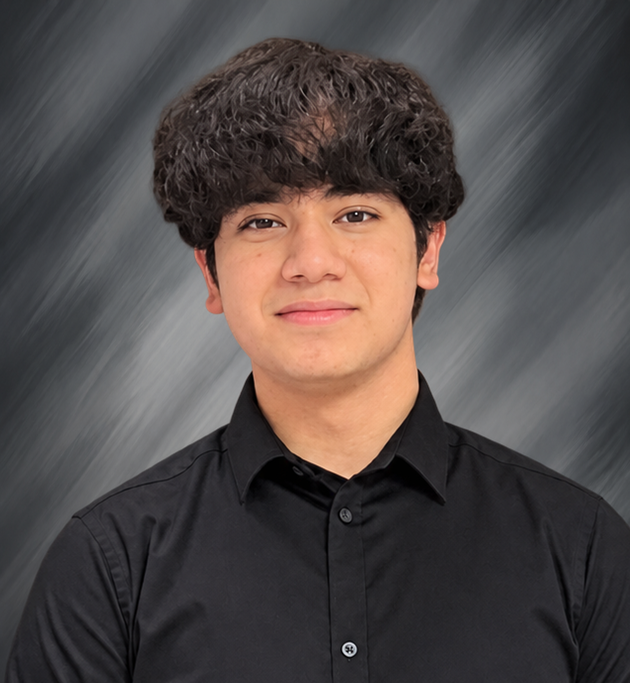
I'm Aryash Shyam
I'm a ninth-grade student researcher, youth innovator, and science communicator from Pennsylvania's Lehigh Valley. I'm a Johns Hopkins Center for Talented Youth Scholar and the 2026 PETE&C Technology Student of the Year, and my work spans mathematics, aerospace science, CRISPR, artificial intelligence, robotics, and computational biology.
The Beginning
Growing Up Curious in the Lehigh Valley
Growing up in the Lehigh Valley, Pennsylvania, I always found myself paying attention to how everyday things work. I spent a lot of time reading on my own and noticing the details of the world around me, simply out of natural curiosity. Over time, I naturally gravitated toward looking more closely at how things operate, whether it was traffic patterns, the movement of a bicycle chain, or frost forming on a window. That way of observing and thinking stayed with me, shaping how I approach things and giving me a clearer sense of what I choose to explore and focus on.
Teen Scientist
Finding My Voice on Public Radio
Every first Thursday of the month, I sit across from someone whose work is quietly reshaping the world, and I get to ask them anything.
That's Teen Scientist, the STEM show I host on WDIY, Lehigh Valley Public Radio, and NPR, airing 6:00–6:30 PM. I remember the first time the ON-AIR light glowed red: a real scientist across the table, a page of questions I had carefully prepared, and thirty minutes to make the conversation count. I was a little nervous at first, but once we started talking, the excitement took over.
And it's a show with a legacy I'm proud to carry forward: Teen Scientist has earned three Excellence in Broadcasting Awards from the Pennsylvania Association of Broadcasters (2021, 2023, and 2024) and a 2024 Keystone Media Award from the Pennsylvania NewsMedia Association — honors from the very community of journalists and broadcasters I admire most.
GreenBeam
Building a Robot That Skips the Chemicals
I kept coming back to a problem that seemed solvable: invasive plant species — plants that spread aggressively outside their native range — are typically removed using chemical herbicides that can damage surrounding ecosystems. I wanted to find a better way. GreenBeam is my answer: a computer-vision system (software that allows a camera to identify specific plants by sight) paired with a precision laser that can target and eliminate invasive plants without applying any chemicals to the surrounding soil or native plants. I built the core system in Python and trained it on plant imagery. The project earned Pennsylvania State Merit recognition in the 3M Young Scientist Challenge, one of the nation's premier science competitions for middle school students — an acknowledgment that the approach is scientifically sound and practically meaningful.
RacingGecko
Teaching STEM on YouTube, One Video at a Time
I created RacingGecko because I kept noticing that the best explanations of AI, coding, math, and science were either too advanced for students starting out, or so simplified they left out the interesting parts. The philosophy behind every video is simple: short, clear, and student-made. If I can understand it well enough to explain it clearly on camera, then the explanation is probably the right length and the right level. I believe students learn better from peers who remember what it felt like to not understand something yet.
Research & Documentaries
Asking the Bigger Questions
My research keeps pulling me toward two questions I keep thinking about: how life survives beyond Earth, and how we've learned to rewrite life's code here at home.
The first is space biology. Through the Genes in Space program, which challenges students to design real experiments for the International Space Station, I've been developing microgravity diagnostics: tools to detect and monitor biological conditions aboard spacecraft, where a single health problem is far from the nearest hospital. The second is CRISPR, the gene-editing technology that lets scientists rewrite DNA with once-impossible precision. I build computational methods to optimize guide RNAs, the molecular "GPS" that steers CRISPR to the exact right spot in the genome. Along the way, my essay on aerospace science won first place nationally in the NASA 2026 AIAA Essay Contest.
But the deeper I went, the more one question stayed with me: what happens when a technology powerful enough to rewrite life itself leaves the lab and enters the world? That question became a documentary. In Editing Humanity: A CRISPR Conundrum, I explore the science and the ethics of gene editing through conversations with researchers, scientists, and the people whose lives these emerging technologies touch most directly.
Honors & Credentials
Recognition
A summary of selected honors, awards, and recognitions.
What is Aryash Shyam's most recent honor?
In 2026, I received several national and international writing honors. I won First Place nationally in the AIAA 8th Grade Essay Competition, was named a National Winner of the ANSI Student Paper Competition, and won the Middle School division of the John Estey Student Writing Competition, presented by the American Writers Museum. I was also shortlisted in the John Locke Institute Global Essay Prize, which received 100,227 entries from 183 countries. All three essays I submitted, in Economics, Philosophy, and Science & Technology, were shortlisted, and I was invited to the Awards Ceremony and academic conference in London in October 2026.
2026 Genes in Space Junior Scientist Award
Genes in Space challenges students to design biology experiments for the International Space Station. My 2026 Junior Scientist Award recognizes my proposal, “Validating a Cell-Free CRISPR Fluorescent RNA Diagnostic in Microgravity,” which explores a compact CRISPR-Cas13 RNA diagnostic for spaceflight.
2026 PETE&C Technology Student of the Year
The Pennsylvania Educational Technology Expo and Conference (PETE&C) Technology Student of the Year award recognizes outstanding student achievement in educational technology in Pennsylvania.
2025 Pennsylvania State Merit Winner — 3M Young Scientist Challenge
The 3M Young Scientist Challenge is one of the nation's premier middle-school science competitions. My GreenBeam project - an AI-powered computer-vision and precision-laser robotic system for residential weed treatment - earned Pennsylvania State Merit recognition in 2025.
First Place — NASA 2026 AIAA Essay Contest
The AIAA student essay contest challenges students to engage deeply with aerospace science and communicate technical ideas clearly. My essay on SN 1987A earned national first place in the 8th Grade division in 2026.
Lehigh Valley Science Fair Winner
Recognition from the regional Lehigh Valley Science Fair for excellence in student-led scientific research and experimentation.
Pennsylvania Association of Broadcasters — Excellence in Broadcasting Awards (2021, 2023, 2024)
Teen Scientist has received three Excellence in Broadcasting Awards from the Pennsylvania Association of Broadcasters, recognizing outstanding achievement in public radio programming.
2024 Keystone Media Award — Pennsylvania NewsMedia Association
The Keystone Media Award is presented by the Pennsylvania NewsMedia Association for distinguished journalism and media. Teen Scientist received this recognition in 2024.
Documentary
Editing Humanity: A CRISPR Conundrum
Some questions are too big to leave in a textbook. What happens when we gain the power to rewrite the code of life itself, and who gets to decide how that power is used? To explore them, I created Editing Humanity: A CRISPR Conundrum, a documentary on the science and ethics of gene editing.
I didn't want easy answers, so I went to the people living the question. I sat down with a UCLA professor working at the frontier of the research, and with patients whose lives are directly touched by these emerging technologies. Their stories turned an abstract debate into something deeply human: hope, risk, and hard choices, told by the people who understand them best.
The film went on to win a Pennsylvania State Award at the National History Day competition. But the reason I made it stays with me more than the recognition: a technology powerful enough to rewrite life should not be understood by scientists alone. It belongs to all of us, and so does the responsibility for how it is used.
FAQ
About Aryash Shyam FAQs
Learn more about Aryash Shyam’s background, STEM interests, leadership roles, educational work, and current projects.
Who is Aryash Shyam?
Aryash Shyam is a ninth-grade student researcher, youth innovator, science communicator, public-radio host, and STEM educator from Pennsylvania's Lehigh Valley. His work spans space biology, CRISPR, artificial intelligence, robotics, mathematics, aerospace science, documentary filmmaking, and youth education. He hosts Teen Scientist on WDIY, an NPR member station, and founded the RacingGecko STEM-learning platform.
Where is Aryash Shyam based, and what school does he attend?
Aryash is based in the Lehigh Valley, Pennsylvania, and attends Lehigh Valley Academy. During the 2026-2027 school year, he is a ninth-grade student. His research, broadcasting, leadership, and STEM-education activities are rooted in the Lehigh Valley while reaching national and international audiences.
What areas of science and technology does Aryash Shyam focus on?
Aryash focuses on space biology, molecular diagnostics, computational CRISPR research, artificial intelligence, computer vision, robotics, mathematics, and aerospace science. He is especially interested in projects that connect technical research with practical impact, including microgravity diagnostics, chemical-free weed control, guide-RNA optimization, and science communication for students and families.
What motivates Aryash Shyam's work?
Aryash is motivated by the belief that science should be investigated rigorously and explained clearly. He builds projects to address real problems, then communicates the ideas through radio interviews, documentary film, educational videos, scientific writing, and peer mentoring. His goal is not only to create new work, but also to help other people understand why it matters.
What leadership and STEM-education roles does Aryash hold?
Aryash is the elected President of Lehigh Valley Academy's National Junior Honor Society chapter, the founder of RacingGecko, and an instructor for AMC 10 and MATHCOUNTS students. He also mentors younger children in foundational mathematics and uses videos, workshops, and peer instruction to make coding, artificial intelligence, mathematics, and science more approachable.
Where can students, educators, researchers, or journalists learn more about Aryash?
Visitors can explore Aryash's research and awards on the
Research & Accolades page, listen to Teen Scientist on the
Teen Scientist page, learn about his
GreenBeam robot on the GreenBeam page, and watch STEM videos on the
Watch page. Interview, collaboration, speaking, and press requests can be submitted through the
Connect page.
In The News